Money makes the world go ‘round, or so the saying goes. Almost every decision made throughout the course of history has had some sort of financial motive behind it, even when it doesn’t seem to be explicitly so. The lust for money turned into the beginning of Imperialism, something that has been present in different ways since Columbus set sail in search of riches for the Spanish Crown.
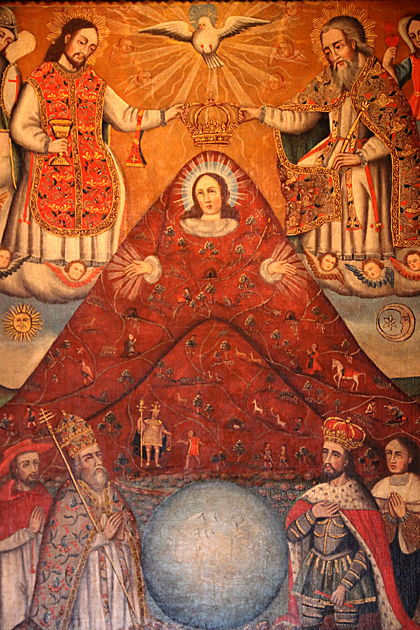
We can look to the Incan Empire, and their system of M’ita, as an early form of imperialism, even though it isn’t imperialism by definition. The Inca, a strong militaristic empire, had control over much of the Andes region in which they lived. Their military went out to unconquered lands and through the sheer threat of war were able to get these Andean people to join the Incan Empire. The M’ita system was a form of tribute given to the empire, where people of working age spent a certain amount of time per year working on public works projects (most notably the famed road network). Where the M’ita system was unique was its flexibility. Commoners were allowed most of their time to work on their farms at home, and did not give up their lives to serve the empire.
Things changed when the Spanish took over. The Spanish took m’ita and modified it to change the entire purpose of the system. Instead of it being used as a public service tool, it was modified to serve the Spanish and use it to send wealth back home to the Spanish Crown. Andean commoners were forced by the Spanish to work in the silver mines of Potosi, an extremely dangerous job that resulted in the death and illness of the workers who lived there. This system can be considered a form of slavery, as these Andeans had no choice but to toil away at this work. Although devastating to the local population, the modified M’ita system ended up being a resounding success for the Spanish, as silver output for the nation increased seven times after its implementation (O’Toole). The colonialist and imperialist actions of the Spanish would become a mold, used by them and other European nations to overpower and then exploit smaller nations with natural resources.
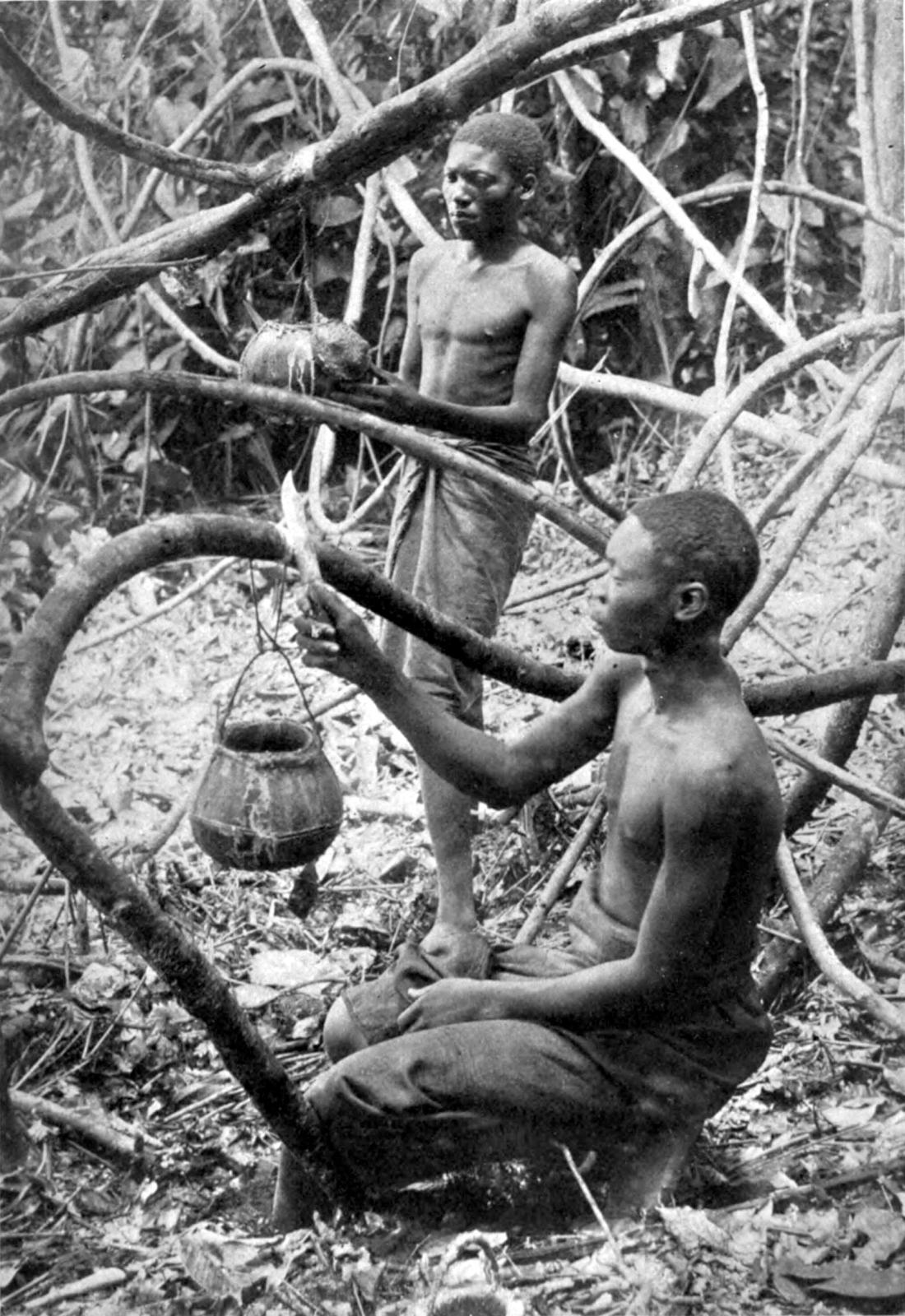
The photo above shows a Congolese man harvesting rubber. Perhaps the most horrifying example of European imperialism can be found in the Belgian Congo. After the price of rubber skyrocketed, King Leopold and the Belgian crown cashed in on the vast supply of rubber found in the Congo. Through slave labor natives were sent into the jungle to cut down trees and harvest rubber sap. This sap would stick to their bodies, and would be scraped off, often “taking flesh and hair with it” (Stanley). Strict and impossible quotas were established, with the punishment for not meeting them being the removal of the hands of workers. There are many more horrifying photos showing the inhumanity of these actions, but are too graphic to be shown in this post. It is estimated that between two and fifteen million people died in the Belgian Colony, making Leopold one of history’s worst mass murderers.
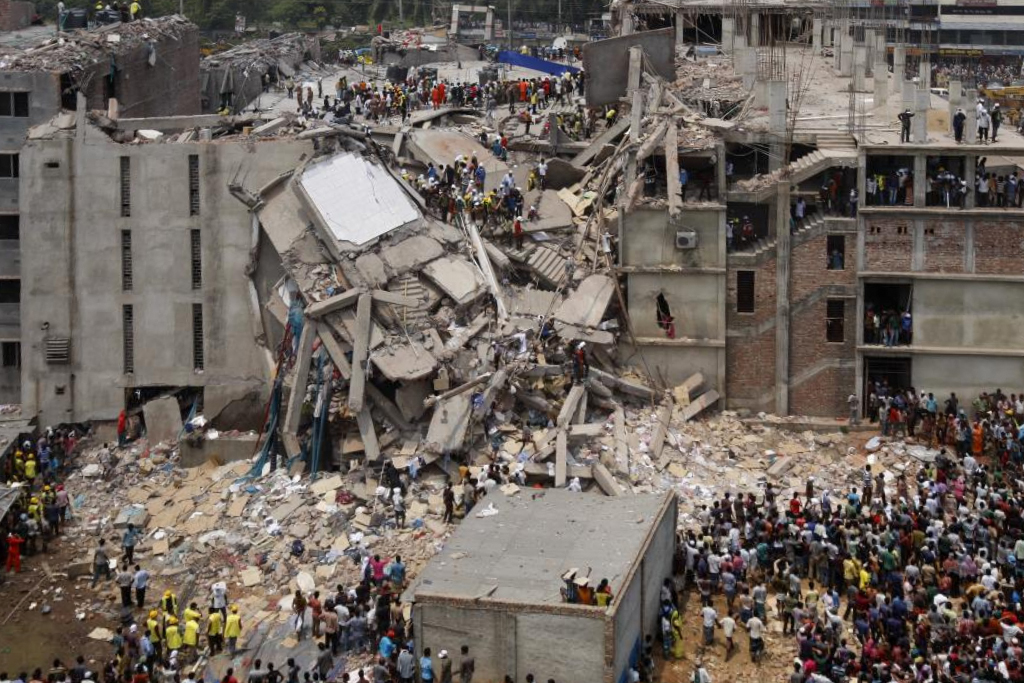
Although slave labor is almost completely eradicated from the world, it is still common in less developed countries to find atrocious working conditions with extreme safety hazards. In an example of this, a building housing garment workers collapsed in 2013, killing 1,134 workers inside (Safi). It was found that there were cracks in the ceiling the day before the building collapsed, but workers were instructed to return to work anyway. The building produced garments for large international companies like Walmart. Although the days of imperialism and slave labor are gone, the exploitation of poor and underdeveloped nations are still common and accepted by wealthy nations like the United States, and can be argued is a form of present-day imperialism. Despite the workers working on their own accord, they are still paid poor wages, work in dangerous conditions, and are at the mercy of the companies they work for. If they complain, the company can just leave and set up shop elsewhere, leaving thousands without a source of income. We’ve made huge strides since the days of M’ita and colonialism, but there’s still a ways to go before we get true change and empowerment in the world.
Canseco, Diez. “History of the Inca Realm.” Google Books, books.google.com/books?id=PfO9_ohMYQQC&printsec=frontcover&dq=inauthor%3A%22Maria%2BRostworowski%2Bde%2BDiez%2BCanseco%22&hl=en&sa=X&ei=idWeUq7DJYfisAS6soDABQ&ved=0CDoQ6AEwAA#v=onepage&q&f=false.
Stanley, Tim. “Belgium’s Heart of Darkness.” History Today, http://www.historytoday.com/tim-stanley/belgiums-heart-darkness.
Rushe, Dominic, and Michael Safi. “Rana Plaza, Five Years on: Safety of Workers Hangs in Balance in Bangladesh | Michael Safi and Dominic Rushe.” The Guardian, Guardian News and Media, 24 Apr. 2018, www.theguardian.com/global-development/2018/apr/24/bangladeshi-police-target-garment-workers-union-rana-plaza-five-years-on.
Virgin of the Mountain. Cuzco School. c.1766. Artstor, library.artstor.org/asset/ABARNITZ_10310630468
Rijans. 2013 Sarvar Building Collapse. 13 April 2013.
Unkown. Collecting Rubber in Forest of Lusambo (Lualaba-Kassai) pre-1905.


