The Tempest and the Taking Back of Language
We’ve seen throughout the course of history language and symbols being used to discriminate against groups without power to fight back against oppression. In this blog post, I’ll be looking at the taking back of symbols and language by one of the most oppressed groups in history, the LGBT community, and connecting this to how Brathwaite fights back against colonialism through his interpretation of The Tempest.
I will start with the LGBT+ community, looking at a symbol used to oppress them first.
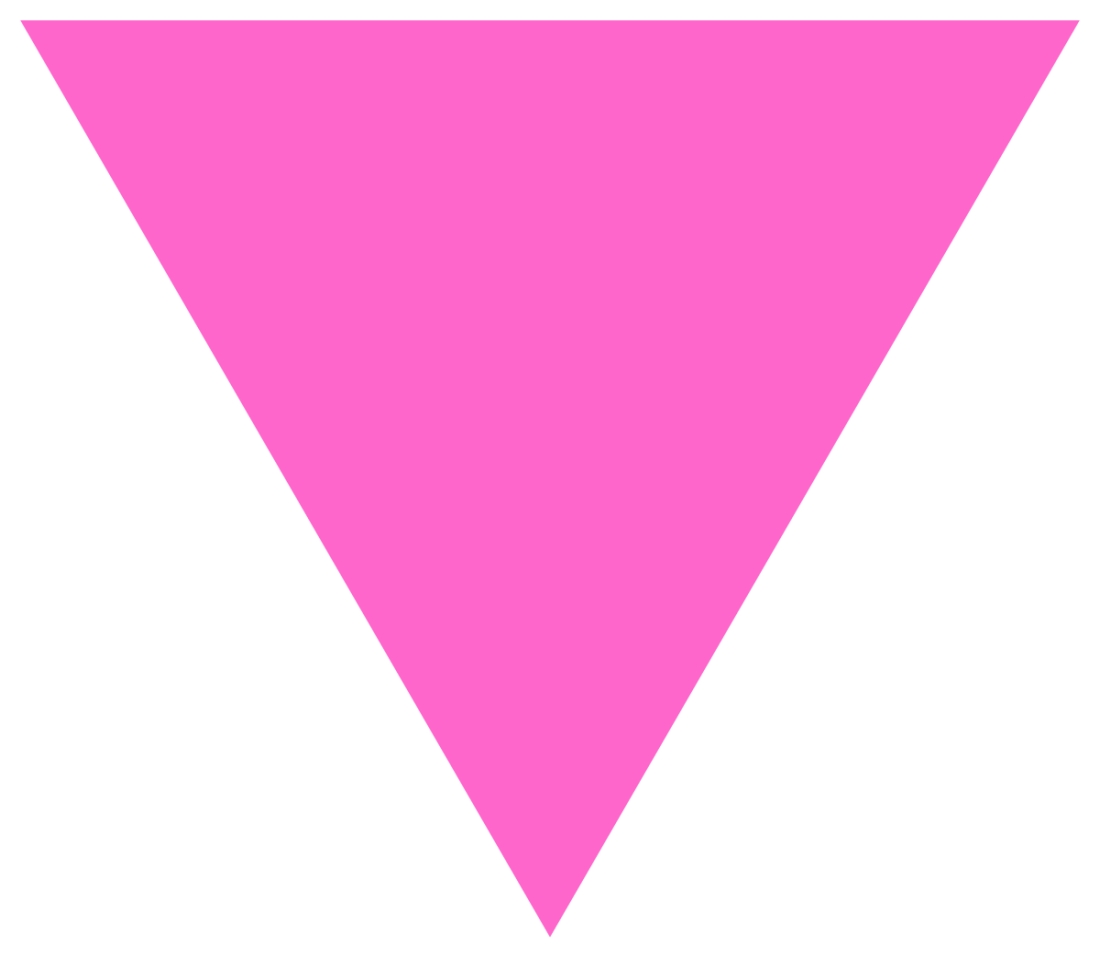
This pink triangle originated in the 1930s and 1940s in Nazi Germany. Called “rosa winkel,” literally translating to “pink triangle” from German to English, this symbol was marked on the clothing of homosexuals or those believed to be gay by the Nazis. After the fall of the Nazis and the liberation of the concentration camps, almost all prisoners were released, with the exception of those sporting the pink triangle on their uniforms. These men were sent back to prison and never got to see freedom because of their orientation. The long fight for equal rights by the LGBT+ community required symbols and other things to rally around. In the 1970s, the Gay Liberation Movement adopted the pink triangle as a symbol, while ACT-UP also adopted it as their symbol. Nowadays, it is a symbol that people identify with and use to represent themselves. The taking back of a symbol from its horrific origins is a shift in the dynamic of power from the oppressors to those fighting for freedom, and only furthers their fight for equality.
The word “queer” is another tool used to oppress those who identify as LGBT+. The word originated in the 1900s and was used as a slur to insult and describe LGBT+ individuals by those in a position of power in the media. The community has taken back the term to the point where individuals refer to themselves as “queer.” It has been overwhelmingly positive to the community, where a once hateful slur is now an inclusive term used to refer to all sorts of sexual and gender identities. Taking back a term used to keep a group oppressed shifts power towards the community, and in addition to building inclusiveness, creates a form of power within the language that empowers this marginalized group.
The Barbadian author Kamau Brathwaite puts his own spin on The Tempest by writing his poem “Letter Sycorax” in the dialect of his native Barbados. To understand the significance we must first look at the history of Barbados. The nation was originally a British colony until 1790, with cash crops like sugar and tobacco being grown there. Growing these crops required large amounts of labor, and the colony was heavily populated with slaves brought over from Africa. As a result, the language spoken on the island is Barbadian English, a form of creole.
“Letter Sycorax” is written in this dialect, and can seem impossible to understand at first. The decision to write the poem in the native Barbadian dialect is a way to push back against the language of Shakespeare being used as a partner to empire. With the English colonizing and enslaving the Barbadians, the language of English was forced upon them. Not speaking pure English and using a different dialect is one way that Barbadians pushed back against the imperial power of the British. With Shakespeare being one of the strongest representations of the English language, and The Tempest being among his most famous works, Brathwaite interpreting that play and rewriting it in Barbadian English is a form of revolt against the imperial power of Shakespeare’s language and empowers his native Barbados by having a masterpiece that is their own.
The taking back of symbols and language of those in power has been and will continue to be used by those who are marginalized. Doing so accomplishes two major things: It prevents oppression by the stronger power, and creates a sense of inclusiveness and something to rally around for those on the short end of the stick.
Sources:
Antonovich, Jacqueline. “Does Pastor Worley Know (or Care) about the Origin of the Pink Triangle?” Nursing Clio, 25 May 2012, nursingclio.org/2012/05/25/does-pastor-worley-know-or-care-about-the-origin-of-the-pink-triangle/.
Higgins, Marissa. “Is The Word ‘Queer’ Offensive?” Bustle, Bustle, 17 Dec. 2018, http://www.bustle.com/articles/139727-is-the-word-queer-offensive-heres-a-look-at-its-history-in-the-lgbtqa-community.
“Letter Sycorax.” Middle Passages: Kamau Braithwaithe, by Edward Braithwaite, Bloodaxe Books., 1992.


