Multimodality can be especially useful to gather people and draw them towards a revolutionary cause. In the case of the Indian independence movement, multimodality in the media supported the cause and provided a sense of unity to Indians. The face of the movement, Mahatma Gandhi, spread his message and strengthened it through the use of multimodality.
We can start by looking at some of Gandhi’s main messages. His primary objective was Swaraj in India, the self-rule and self-government of the nation. He pushed the concept of Satyagraha, or passive resistance, and dictated that course of action as the way for India to gain its independence from the British crown.
One of the primary methods of Satyagraha that Gandhi pushed to those following him was Swadeshi, the movement of being more self-sustaining as a people. The movement was primarily focused on the British textile industry and moving away from buying the clothing products made by the British. It encouraged Indians to spin their own cotton and make their own clothing, both to be able to sustain themselves more and take money out of the pockets of the British.
The effects of this movement were amplified by photos of Gandhi himself spinning cotton on a wheel taken in 1946 and spread throughout the world.
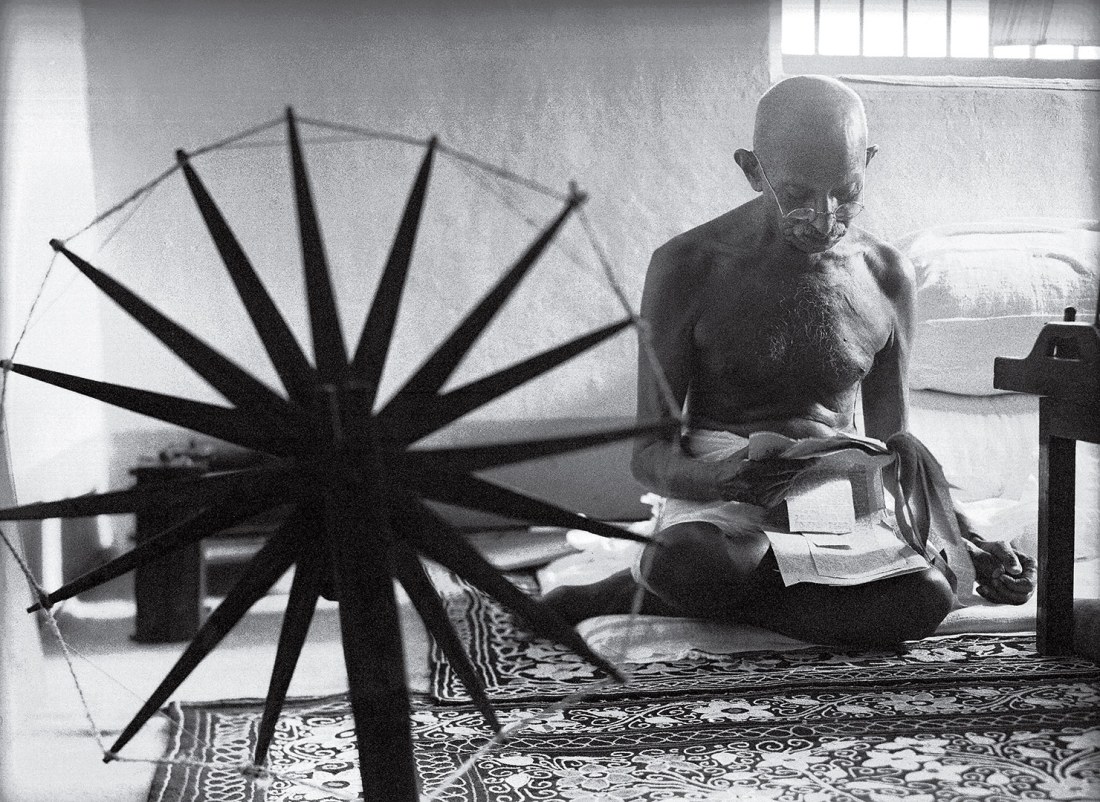
It is one thing to read Gandhi’s work or hear about it through speeches, but actually seeing the leader of the movement spinning his own thread and following through with his message is significantly more inspirational. That is where the multimodality of Gandhi’s movement comes into play. Leading by example and having it presented to a worldwide audience did wonders in gaining support both at home and abroad.
Multimodality is being used today by many movements to spread their message and gain support for their cause. One in particular that has benefited from modern multimodal media is the Black Lives Matter (BLM) movement against police brutality. Following multiple police-involved shooting deaths of unarmed African-Americans in a short period of time, the movement was started and quickly gained momentum and placement in the media.
BLM utilized traditional methods like marches and protests, but the digital era made their message more widespread. Using social media like Twitter and Facebook to relay information allowed them to reach a massive audience. Another way the movement succeeded in getting their message out was in popular culture, especially through hip-hop and rap music. Famous hip-hop artists publicized police brutality in their lyrics and allowed the BLM message to reach audiences that listened to their music. Los Angeles rapper YG rapped on his song “Police Get Away Wit Murder”:
Black males in a hoodie that’s a target to them
They say he oversized and choked him out that was harmless to them
They’ll hit us and try to blame it like I ain’t owe this to themWe’ll put our hands up and they’ll still shoot *******
And post on trial for one to two *******
And 13-time Grammy award winner Kendrick Lamar rapped:
“Ten Hail Marys, I meditate for practice
Channel 9 news tell me I’m movin’ backwards
Eight blocks left, death is around the corner
Seven misleadin’ statements ’bout my persona
Six headlights wavin’ in my direction
Five-O askin’ me what’s in my possession”
The different multimodal forms of protest used by those involved in the BLM movement were used jointly to offer a form of passive resistance against police brutality in the United States. Although change did not and will not happen quickly, like in Gandhi’s fight for independence, continual resistance will result in gradual change and the providing of a more equitable life for African-Americans in the US.
Works Cited:
YG, “Police Get Away Wit Murder.” Still Brazy, Def Jam Recordings, 2016, track 17
Lamar, Kendrick; Beyonce. “Freedom.” Lemonade, Columbia Records, 2016, track 10
Gandhi, Mahatma, 1869-1948. Hind Swaraj and Other Writings. Cambridge ; New York Cambridge University Press, 1997. Print.
Bourke-White, Margaret, 1904-1971.. Mahatma Gandhi. 1946.. Artstor, library.artstor.org/asset/CARNEGIE_2660006


