When I first set off on the daunting task of the research paper, I started off thinking about recent events that had influenced my life. I tend to be cynical and not let events affect my thinking too much. At the end of the day, bad things are always going to happen in the world and there’s no sense in getting caught up in them. Politics is more of the same. There’s always going to be stories about why one side is bad and stories about why the other side is worse. With this in mind, I sat back and thought about what had really affected my life and I could write about. With abortion rights being a hot topic at the time, I thought about the debate that has been endlessly being fought in the media and how each side spreads its information different ways. It hit me then: a video I had seen browsing Reddit over a year ago about news anchors saying the same thing. I recalled the impact it had on me, genuinely frightening me at the state of what is supposed to be a truly free press. Whatever the intentions of the video, it worked on making me fearful of the reality and terrified of the future. With this in mind, I had the subject of my research paper in mind.
Analyzing the video would not be easy, as I had to sift through a lot of background to understand how this situation even ended up happening. 40 plus years of history later I had an understanding of the circumstances leading up to this, but I realized that no other person is going to do enough research. I found that this would be the subject of analysis: how people are being unknowingly influenced by the content that they watch, and is there any way to stop that? In the case of the video I had seen, it is the conservative powers at play controlling the spread of information and I was curious to find out why liberal groups just don’t do the same thing.
Long story short, there isn’t enough money behind them to do the same. But how can they compete with the spread of information coming out of their opponents? The video got my attention and that of others, so it must be a viable blueprint for future campaigns. Analyzing the video to show why it was successful and how it could be used in the future would become central to my project, and I followed that blueprint writing it.
I would like to see my research paper be taken further with focus on other artifacts, namely other forms of resistance that have gained the attention of the public and social media. I believe that bringing up other pieces of evidence that support the analysis of my research paper would be beneficial to public knowledge and could provide liberals with a strategy to use to gain support and fight the monetary influence that is against. Doing so is important because of the vast reach of conservative media and the millions of people it targets and influences every day. People should be able to make their own decisions, not have the richest player buy their way into their eyes and ears. For the sake of democracy, I hope it goes further and becomes wider knowledge.
If you asked Americans what they think the most dangerous company in the United States is, you’ll probably get different answers depending on who you end up asking. Some will say tobacco companies. They have been proven to give people a ton of different types of cancers and illnesses just by existing and pushing out the products they made. It also doesn’t help when they have a history of pushing their products to children, and have created new products to target minors (Vape, anyone?). Others may tell you it’s companies that make alcoholic products, or those that make sexually explicit films or music. Gun companies are another popular choice, along with corporations that drill for oil or other natural resources, harming the economy while they do so.
What if I told you that the most dangerous company in America is one that you’ve probably never heard of?
Enter, Sinclair Broadcast Group. Sinclair Broadcasting owns 193 local affiliate news stations throughout the United States—the most of any company in the US. With their assets reaching such a large audience, the power they hold is immense. The company has been under fire for forcing all of their stations to read a script on the air about fake news and how members of the media perpetuate bias and opinion in their work. In a video shown below, the eerie statement is repeated over and over again on different channels across the country.
I’ve always been fascinated by media in this country and throughout the world to the point that I had originally wanted to go to school and go into journalism. There was a point in time where news anchors like Walter Cronkite were looked up to by everyone. Today, it isn’t the same, and people want to get their news from the side that they support. How did this happen? What were the causes that has made our society like this?
For my research paper, I’d like to look at news in this country from World War Two to the present day. The news has drastically changed in it’s form, going from print to radio to television to digitally available online, and the way the news is presented has drastically changed as well. I’d like to look at how the news shifted from local channels and newspapers into the massive corporate media conglomerates that exist today. I will look through analyzing primary sources such as news articles, videos, onto my primary focus which will be legislation in Congress as well as any communications related to those forms of legislation. I’ll also be looking into the behemoth that is social media, and the spread of fake news and misinformation campaigns on the internet.
News and media companies run this nation, and have a form of empire that shouldn’t be happening in a free democratic country. I’ll trace how we let this happen as my research.
Works Cited:
Fortin, Jacey, and Jonah Engel Bromwich. “Sinclair Made Dozens of Local News Anchors Recite the Same Script.” The New York Times, The New York Times, 2 Apr. 2018, http://www.nytimes.com/2018/04/02/business/media/sinclair-news-anchors-script.html.
Multimodality can be especially useful to gather people and draw them towards a revolutionary cause. In the case of the Indian independence movement, multimodality in the media supported the cause and provided a sense of unity to Indians. The face of the movement, Mahatma Gandhi, spread his message and strengthened it through the use of multimodality.
We can start by looking at some of Gandhi’s main messages. His primary objective was Swaraj in India, the self-rule and self-government of the nation. He pushed the concept of Satyagraha, or passive resistance, and dictated that course of action as the way for India to gain its independence from the British crown.
One of the primary methods of Satyagraha that Gandhi pushed to those following him was Swadeshi, the movement of being more self-sustaining as a people. The movement was primarily focused on the British textile industry and moving away from buying the clothing products made by the British. It encouraged Indians to spin their own cotton and make their own clothing, both to be able to sustain themselves more and take money out of the pockets of the British.
The effects of this movement were amplified by photos of Gandhi himself spinning cotton on a wheel taken in 1946 and spread throughout the world.
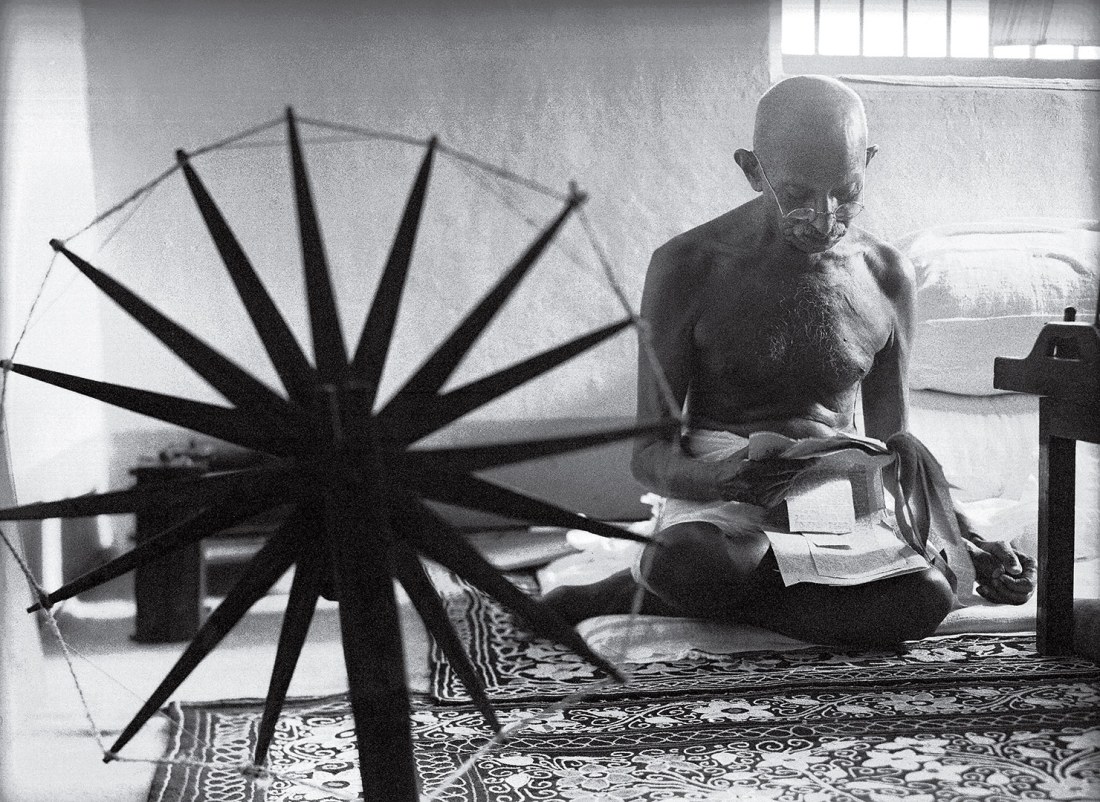
It is one thing to read Gandhi’s work or hear about it through speeches, but actually seeing the leader of the movement spinning his own thread and following through with his message is significantly more inspirational. That is where the multimodality of Gandhi’s movement comes into play. Leading by example and having it presented to a worldwide audience did wonders in gaining support both at home and abroad.
Multimodality is being used today by many movements to spread their message and gain support for their cause. One in particular that has benefited from modern multimodal media is the Black Lives Matter (BLM) movement against police brutality. Following multiple police-involved shooting deaths of unarmed African-Americans in a short period of time, the movement was started and quickly gained momentum and placement in the media.
BLM utilized traditional methods like marches and protests, but the digital era made their message more widespread. Using social media like Twitter and Facebook to relay information allowed them to reach a massive audience. Another way the movement succeeded in getting their message out was in popular culture, especially through hip-hop and rap music. Famous hip-hop artists publicized police brutality in their lyrics and allowed the BLM message to reach audiences that listened to their music. Los Angeles rapper YG rapped on his song “Police Get Away Wit Murder”:
Black males in a hoodie that’s a target to them
They say he oversized and choked him out that was harmless to them
They’ll hit us and try to blame it like I ain’t owe this to themWe’ll put our hands up and they’ll still shoot *******
And post on trial for one to two *******
And 13-time Grammy award winner Kendrick Lamar rapped:
“Ten Hail Marys, I meditate for practice
Channel 9 news tell me I’m movin’ backwards
Eight blocks left, death is around the corner
Seven misleadin’ statements ’bout my persona
Six headlights wavin’ in my direction
Five-O askin’ me what’s in my possession”
The different multimodal forms of protest used by those involved in the BLM movement were used jointly to offer a form of passive resistance against police brutality in the United States. Although change did not and will not happen quickly, like in Gandhi’s fight for independence, continual resistance will result in gradual change and the providing of a more equitable life for African-Americans in the US.
Works Cited:
YG, “Police Get Away Wit Murder.” Still Brazy, Def Jam Recordings, 2016, track 17
Lamar, Kendrick; Beyonce. “Freedom.” Lemonade, Columbia Records, 2016, track 10
Gandhi, Mahatma, 1869-1948. Hind Swaraj and Other Writings. Cambridge ; New York Cambridge University Press, 1997. Print.
Bourke-White, Margaret, 1904-1971.. Mahatma Gandhi. 1946.. Artstor, library.artstor.org/asset/CARNEGIE_2660006
The Tempest and the Taking Back of Language
We’ve seen throughout the course of history language and symbols being used to discriminate against groups without power to fight back against oppression. In this blog post, I’ll be looking at the taking back of symbols and language by one of the most oppressed groups in history, the LGBT community, and connecting this to how Brathwaite fights back against colonialism through his interpretation of The Tempest.
I will start with the LGBT+ community, looking at a symbol used to oppress them first.

This pink triangle originated in the 1930s and 1940s in Nazi Germany. Called “rosa winkel,” literally translating to “pink triangle” from German to English, this symbol was marked on the clothing of homosexuals or those believed to be gay by the Nazis. After the fall of the Nazis and the liberation of the concentration camps, almost all prisoners were released, with the exception of those sporting the pink triangle on their uniforms. These men were sent back to prison and never got to see freedom because of their orientation. The long fight for equal rights by the LGBT+ community required symbols and other things to rally around. In the 1970s, the Gay Liberation Movement adopted the pink triangle as a symbol, while ACT-UP also adopted it as their symbol. Nowadays, it is a symbol that people identify with and use to represent themselves. The taking back of a symbol from its horrific origins is a shift in the dynamic of power from the oppressors to those fighting for freedom, and only furthers their fight for equality.
The word “queer” is another tool used to oppress those who identify as LGBT+. The word originated in the 1900s and was used as a slur to insult and describe LGBT+ individuals by those in a position of power in the media. The community has taken back the term to the point where individuals refer to themselves as “queer.” It has been overwhelmingly positive to the community, where a once hateful slur is now an inclusive term used to refer to all sorts of sexual and gender identities. Taking back a term used to keep a group oppressed shifts power towards the community, and in addition to building inclusiveness, creates a form of power within the language that empowers this marginalized group.
The Barbadian author Kamau Brathwaite puts his own spin on The Tempest by writing his poem “Letter Sycorax” in the dialect of his native Barbados. To understand the significance we must first look at the history of Barbados. The nation was originally a British colony until 1790, with cash crops like sugar and tobacco being grown there. Growing these crops required large amounts of labor, and the colony was heavily populated with slaves brought over from Africa. As a result, the language spoken on the island is Barbadian English, a form of creole.
“Letter Sycorax” is written in this dialect, and can seem impossible to understand at first. The decision to write the poem in the native Barbadian dialect is a way to push back against the language of Shakespeare being used as a partner to empire. With the English colonizing and enslaving the Barbadians, the language of English was forced upon them. Not speaking pure English and using a different dialect is one way that Barbadians pushed back against the imperial power of the British. With Shakespeare being one of the strongest representations of the English language, and The Tempest being among his most famous works, Brathwaite interpreting that play and rewriting it in Barbadian English is a form of revolt against the imperial power of Shakespeare’s language and empowers his native Barbados by having a masterpiece that is their own.
The taking back of symbols and language of those in power has been and will continue to be used by those who are marginalized. Doing so accomplishes two major things: It prevents oppression by the stronger power, and creates a sense of inclusiveness and something to rally around for those on the short end of the stick.
Sources:
Antonovich, Jacqueline. “Does Pastor Worley Know (or Care) about the Origin of the Pink Triangle?” Nursing Clio, 25 May 2012, nursingclio.org/2012/05/25/does-pastor-worley-know-or-care-about-the-origin-of-the-pink-triangle/.
Higgins, Marissa. “Is The Word ‘Queer’ Offensive?” Bustle, Bustle, 17 Dec. 2018, http://www.bustle.com/articles/139727-is-the-word-queer-offensive-heres-a-look-at-its-history-in-the-lgbtqa-community.
“Letter Sycorax.” Middle Passages: Kamau Braithwaithe, by Edward Braithwaite, Bloodaxe Books., 1992.
Money makes the world go ‘round, or so the saying goes. Almost every decision made throughout the course of history has had some sort of financial motive behind it, even when it doesn’t seem to be explicitly so. The lust for money turned into the beginning of Imperialism, something that has been present in different ways since Columbus set sail in search of riches for the Spanish Crown.
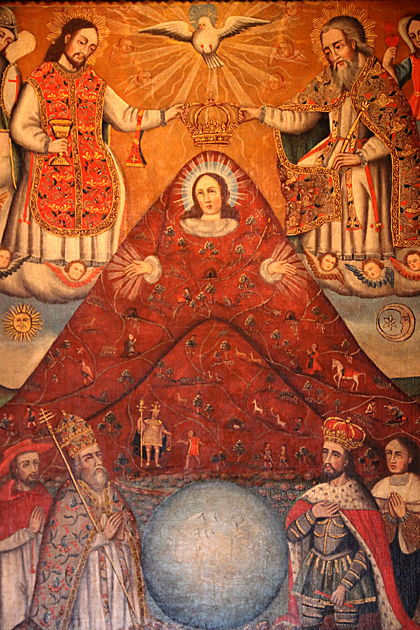
We can look to the Incan Empire, and their system of M’ita, as an early form of imperialism, even though it isn’t imperialism by definition. The Inca, a strong militaristic empire, had control over much of the Andes region in which they lived. Their military went out to unconquered lands and through the sheer threat of war were able to get these Andean people to join the Incan Empire. The M’ita system was a form of tribute given to the empire, where people of working age spent a certain amount of time per year working on public works projects (most notably the famed road network). Where the M’ita system was unique was its flexibility. Commoners were allowed most of their time to work on their farms at home, and did not give up their lives to serve the empire.
Things changed when the Spanish took over. The Spanish took m’ita and modified it to change the entire purpose of the system. Instead of it being used as a public service tool, it was modified to serve the Spanish and use it to send wealth back home to the Spanish Crown. Andean commoners were forced by the Spanish to work in the silver mines of Potosi, an extremely dangerous job that resulted in the death and illness of the workers who lived there. This system can be considered a form of slavery, as these Andeans had no choice but to toil away at this work. Although devastating to the local population, the modified M’ita system ended up being a resounding success for the Spanish, as silver output for the nation increased seven times after its implementation (O’Toole). The colonialist and imperialist actions of the Spanish would become a mold, used by them and other European nations to overpower and then exploit smaller nations with natural resources.
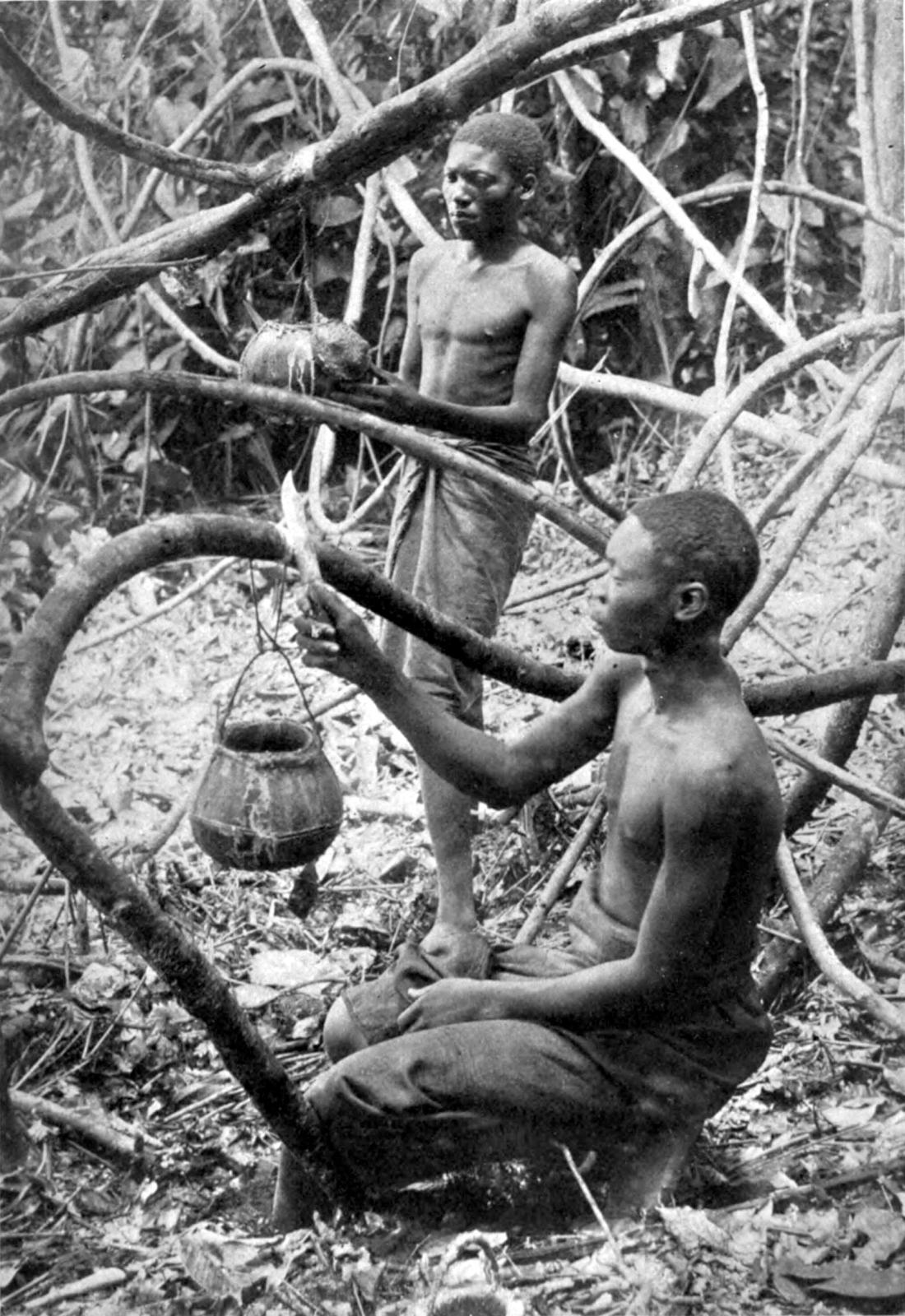
The photo above shows a Congolese man harvesting rubber. Perhaps the most horrifying example of European imperialism can be found in the Belgian Congo. After the price of rubber skyrocketed, King Leopold and the Belgian crown cashed in on the vast supply of rubber found in the Congo. Through slave labor natives were sent into the jungle to cut down trees and harvest rubber sap. This sap would stick to their bodies, and would be scraped off, often “taking flesh and hair with it” (Stanley). Strict and impossible quotas were established, with the punishment for not meeting them being the removal of the hands of workers. There are many more horrifying photos showing the inhumanity of these actions, but are too graphic to be shown in this post. It is estimated that between two and fifteen million people died in the Belgian Colony, making Leopold one of history’s worst mass murderers.
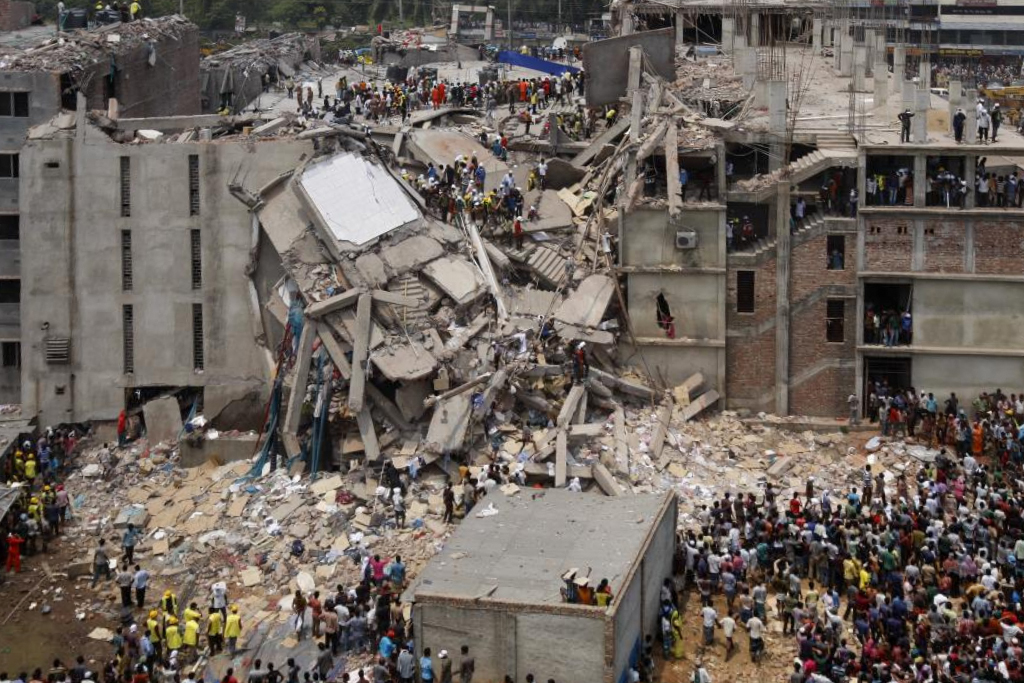
Although slave labor is almost completely eradicated from the world, it is still common in less developed countries to find atrocious working conditions with extreme safety hazards. In an example of this, a building housing garment workers collapsed in 2013, killing 1,134 workers inside (Safi). It was found that there were cracks in the ceiling the day before the building collapsed, but workers were instructed to return to work anyway. The building produced garments for large international companies like Walmart. Although the days of imperialism and slave labor are gone, the exploitation of poor and underdeveloped nations are still common and accepted by wealthy nations like the United States, and can be argued is a form of present-day imperialism. Despite the workers working on their own accord, they are still paid poor wages, work in dangerous conditions, and are at the mercy of the companies they work for. If they complain, the company can just leave and set up shop elsewhere, leaving thousands without a source of income. We’ve made huge strides since the days of M’ita and colonialism, but there’s still a ways to go before we get true change and empowerment in the world.
Canseco, Diez. “History of the Inca Realm.” Google Books, books.google.com/books?id=PfO9_ohMYQQC&printsec=frontcover&dq=inauthor%3A%22Maria%2BRostworowski%2Bde%2BDiez%2BCanseco%22&hl=en&sa=X&ei=idWeUq7DJYfisAS6soDABQ&ved=0CDoQ6AEwAA#v=onepage&q&f=false.
Stanley, Tim. “Belgium’s Heart of Darkness.” History Today, http://www.historytoday.com/tim-stanley/belgiums-heart-darkness.
Rushe, Dominic, and Michael Safi. “Rana Plaza, Five Years on: Safety of Workers Hangs in Balance in Bangladesh | Michael Safi and Dominic Rushe.” The Guardian, Guardian News and Media, 24 Apr. 2018, www.theguardian.com/global-development/2018/apr/24/bangladeshi-police-target-garment-workers-union-rana-plaza-five-years-on.
Virgin of the Mountain. Cuzco School. c.1766. Artstor, library.artstor.org/asset/ABARNITZ_10310630468
Rijans. 2013 Sarvar Building Collapse. 13 April 2013.
Unkown. Collecting Rubber in Forest of Lusambo (Lualaba-Kassai) pre-1905.
It’s about that time. We’ve reached the end of the quarter, and everybody (myself included) is dreading the arrival of finals just a few days away. In my past couple of blog posts, I’ve been tracing technology and its effects on empire, relating my major to the theme of Humanities Core this year. This post will wrap up my thoughts for the quarter, tying in novels we’ve read with the overarching themes for this blog and the course.
I’m aware that my past blog post (and this one) are extremely critical of tech in today’s world, and I don’t want my past posts to seem like I’m some crusader against technology, a conspiracy nut who believes Big Brother is listening to everything we’re saying and that we all need to move to the desert and revolt against the government. I’m quite the opposite: I couldn’t go a day without my phone, computer, or other tech devices. I’ve just made it a point to inform and comment on issues related to tech that come up, and currently, those issues revolve around privacy in tech.
The United States of America is the most powerful and influential country on Earth. It is undoubtedly an empire, possessing vast amounts of wealth and military strength and exporting its cultural influence across the world. With this power comes technological strength: putting a man on the moon 50 years ago, inventing cell phones, self-driving cars, and other impeccable feats. On a sinister note, however, the government’s technology has been getting stronger. I’ll talk more about that later, but I’d like to expand off my previous blog post relating to Borderlands by the Chicana author Anzaldua, and her message about the villainization of undocumented migrants.
We can see the targeting of certain groups in our society. Right-wing groups have targeted undocumented immigrants, riling up anti-immigrant fervor within their support bases. You can see it at Conservative-leaning events throughout the country: crowds chanting “Build the wall!” in support of President Trump’s proposed wall on the Mexican border. Just as equal fervor can be found against Middle-Eastern and Muslim peoples, with the President passing legislation banning entry to the United States by people of five Muslim-majority countries (New York Times). The official title of the ban is “Protecting the Nation from Foreign Terrorist Entry into the United States,” with a concerted effort to have Americans connect those nations with terrorism, and nothing else.
I couldn’t help but notice a connection between the immigration ban and President Trump’s rhetoric surrounding it and J.M. Coetzee’s Waiting for the Barbarians. Throughout the novel, the empire that the magistrate works for makes many attempts to villainize the barbarians that live in the area. Their attempts to paint the barbarians as a vicious enemy eventually end up succeeding. It is said among the people that “All night…the barbarians prowl about bent on murder and rapine” (Coetzee 163). When a girl is raped, people “claim a barbarian did it” (164). By Chapter 6, the people in the magistrate’s outpost are fully convinced of the barbarians as an enemy, and the novel ends with the magistrate standing at his “window watching the snow fall” (208), quite literally waiting for the barbarians to arrive. What the empire wants to accomplish is unknown to the reader, but with the barbarians established as an enemy, the empire can do whatever it wants without any interference. This happens in the real world: government, through propaganda or other means, distracts the public by directing their attention one way, and accomplishing their goals under the radar.
While President Trump hasn’t succeeded to the extent that the empire in Waiting for the Barbarians did, some of his predecessors have used distractions to enact laws that have harmed Americans. Most notable is the PATRIOT Act, passed after the 9/11 attacks. It authorized a plethora of national security programs, with the chief offender being the program that authorized the National Security Agency (NSA) to collect intelligence on phone calls of Americans without the need of a warrant. While this program was ended once it was discovered, similar programs continue to exist. Even as these programs are in effect, they do not collect nearly as much data as is collected by private sector companies. In a huge scandal, British company Cambridge Analytica collected data on 87 million users, and used that data to help Trump win the 2016 Presidential election (CNET).
Technology improves everyone’s lives. It can save those who previously would not have survived otherwise. It can save people time, money, and hassle. At the same time, it comes with dangers. The takeaway at the end of the day is that people need to be smarter about their privacy, and be careful what they do with their data. Companies like Facebook are building a virtual empire with your data, and that is data that you willingly give to them by using their service. Leaders like Apple CEO Tim Cook have called for comprehensive privacy laws to be enacted (The Verge), and more people need to follow their lead and push for change. So while technology helps our lives, we have to be vigilant to make sure it can’t hurt us and our rights.
Works Cited:
Coetzee, John Maxwell. Waiting for the Barbarians. Secker and Warburg, 1983.
Gladstone, Rick, and Satoshi Sugiyama. “Trump’s Travel Ban: How It Works and Who Is Affected.” The New York Times, The New York Times, 1 July 2018, http://www.nytimes.com/2018/07/01/world/americas/travel-ban-trump-how-it-works.html.
Vincent, James. “Tim Cook Warns of ‘Data-Industrial Complex’ in Call for Comprehensive US Privacy Laws.” The Verge, The Verge, 24 Oct. 2018, http://www.theverge.com/2018/10/24/18017842/tim-cook-data-privacy-laws-us-speech-brussels.
As we near the end of the quarter, Gloria Anzaldua’s Borderlands has come up as a reading. It has definitely been one of the more unique literary works that I have read in my life, and also one of the more difficult ones to read through simply due to the fact that Anzaldua cycles through English and Spanish at a moment’s notice. To those like myself who don’t speak Spanish, it’s a slow read, with the need to stop and translate most of the phrases to be able to see what the author is saying.
Did Anzaldua write Borderlands this way just to make it difficult to read for those who don’t speak Spanish? Although it may seem like it, it’s most definitely not the case. A key part of her message throughout the book is the idea of being caught in the borderlands: an area that is not part of the US or Mexico, essentially a constant state of limbo in between two nations. Those living in these borderlands find themselves stuck between two cultures, and Anzaldua shows exactly what that is like by going back and forth between English and Spanish. By doing so, she passes the burden of confusion onto the reader, offering a glimpse into the experience of the chicanos who live through it first hand.
Since 1904, there has been an effort by the United States to stop illegal immigration from happening at the border (CBP). Federal agents known as Mounted Guards operated along out of El Paso Texas, patrolling the same “flatlands of the magic valley of South Texas” that Anzaldua describes (Anzaldua 24). Anzaldua talks about the “coyotes” who collect thousands of dollars from Mexicans looking to cross into America in search of economic freedom. She tells the story of the “mojados” who cross the Rio Grande, about the women who are exploited by those who help them cross the border, and of the workers who work in dangerous conditions, scared to be deported back.
As intense as the struggles of these people are, there is an equally intense push by people in this country to stop these people from coming in. On one hand, the Mexican economy is in tatters, and these immigrants are simply fleeing to improve their lives. On the other hand, many legal citizens feel strongly about immigrants coming in illegally without having to go through the same processes they had to. As such, we have seen a large push in politics recently, with candidates taking hardline stances against illegal immigration, most notably being the President’s plan to build a wall along the border.
Throughout the quarter, this blog has been tracing technology and its effect on empire. With technology being almost infinitely greater than it was in 1904, the border is being guarded much more closely. New technology being deployed is improving security at the border, which at the surface appears to be good for America. However, looking deeper at these new methods shows that expanded use may tear away at the very fabric the American empire was founded on.
With heavier strides being made in an attempt to curb illegal immigration, private sector companies have been developing new tech to help Border Patrol stop crossers. Anduril Industries is one of those companies and has developed “towers that feature a laser-enhanced camera, radar and a communications system” that scan a two mile radius and use “artificial intelligence to pick out humans from wildlife and other moving objects” (The Guardian). Elbit Systems, another player in the space, has built “dozens of towers” in Arizona that can identify people from “as far as 7.5 miles away” (The Guardian). These new technologies only result in migrants using riskier methods to cross into the US, making the already dangerous journey even more treacherous.
Moving past the border, there are thousands of undocumented people living throughout the United States. These undocumented migrants are inherently frightful of deportation, but Mexican women are especially vulnerable, as Anzaldua talks about. These “mojadas” live in constant economic fear. They take low levels jobs while “American employers are quick to take advantage of her helplessness” (34). As some Americans rail against illegal immigration, and take up a (in their eyes) noble cause, almost all are not privy to the struggles of these women. They work harder than anyone, with nothing but a chance at opportunity in a new country to show for it. However, for every hardworking “mojada” struggling to make it in a new country, there are countless more who have been harmed by the very smugglers they hired. As Anzaldua explains, “Often [the smuggler] rapes her or sells her into prostitution” (34). These women put their lives on the line to come to los Estados Unidos, and generic anti-immigrant fervor does not give them justice.
As part of plans influenced by the President, Immigration and Customs Enforcement (ICE) has been using new methods to find and deport undocumented people living in the US. In March of this year, ICE was found to have used Facebook data to track people the agency suspected of being undocumented (Fortune). ICE also met with Amazon to discuss implementation of a facial-recognition system that would track people’s faces and help the agency identify and target immigrants (Washington Post). These efforts by ICE have disregarded privacy of Americans in a laser-focused goal to deport the undocumented.
Americans want security in their nation, but at what cost has that come at? With these Big Brother-esque methods being used by ICE to find immigrants, privacy of Americans is being compromised as well. Americans are guaranteed the right to privacy through the Constitution, and the evolution of technology has only resulted in the destruction of the rights of Americans. Whether it be the PATRIOT Act, the NSA, and more national security measures, the privacy of Americans has been under siege.
While these technologies being used against those crossing the border may not seem like a big deal, it only opens the door to these same technologies being used against Americans in the future. America was founded and grown on preserving the rights of its citizens. As rights are taken away, what has made the American empire great fades, and with it the empire fades too.
Works Cited:
Anzaldúa Gloria. Borderlands = La Frontera: the New Mestiza. Aunt Lute Books., 2012.
“Border Patrol History.” Remembering Two 9/11s | U.S. Customs and Border Protection, CBP, http://www.cbp.gov/border-security/along-us-borders/history.
“ICE Reportedly Uses Facebook Data to Track Suspected Illegal Immigrants.” Fortune, Fortune, fortune.com/2018/03/27/facebook-data-ice-immigrants-deport/.
Harwell, Drew. “Amazon Met with ICE Officials over Facial-Recognition System That Could Identify Immigrants.” The Washington Post, WP Company, 23 Oct. 2018, http://www.washingtonpost.com/technology/2018/10/23/amazon-met-with-ice-officials-over-facial-recognition-system-that-could-identify-immigrants/?utm_term=.cbaa496a33f3.
As a class, we’ve moved on from Aeneas and the Roman Empire and waded into the world of the Enlightenment, and ruin imagery. With that comes the works of Enlightenment philosopher Jean Jacques Rousseau, who wrote a series of Discourses regarding the state of affairs in Europe.
In his Discourse of the Arts and Sciences, Rousseau claims that progress is regress. In common terms, he’s saying that as humanity makes advancements in the artistic and scientific fields, society loses the most important part of it’s makeup. In Rousseau’s mind, the mores of society—customs or traditions—are most important to people.
Rousseau backs up his argument with historical examples, and as a bit of a familiar surprise chooses to use ancient Rome as a case study. He compares Republican Rome and Imperial Rome, and points out that although Republican Rome was less advanced technologically, it expanded and thrived as an empire. Imperial Rome, despite being significantly more advanced, was the time period that ended up in the destruction of the Romans.
Now, the question is: How valid is Rousseau’s Argument? Are our advancements in technology and the arts causing us to lose our grasp on society?
Throughout the course of this blog, I made it a goal to relate technology to the course theme of “Empire and its Ruins” and Rousseau’s claim in his first Discourse offers a unique opportunity to do so. Up until the invention of the telephone, people could only communicate in person. People knew each other’s names, faces, hobbies, and more. There was a much closer bond, as face-to-face interaction was the only form of communication.
As technology advanced, the telephone became cheaper and more accessible, and within a short period of time it existed in the majority of households. When talking to a friend is just a phone call away, how much of an incentive is there to make an effort to meet in person? This problem would only be compounded with the invention of cell phones, as instant communication became available worldwide.
Personally, this easy access to communication with others has made social interactions different. There have been plenty of nights where I have chosen to sit down, turn on my computer, and play video games online with some people I know rather than going out as a group. I was still communicating with my friends through Skype, but the level of interaction was a lot less significant and meaningful than seeing them in person.
This brings up an interesting dilemma: On one hand, without these sorts of technological advancements, I would not have been able to communicate with my friends at all. On the other hand, I did not hang out with them in person because the technology existed. This problem has, is, and will be discussed often.
Perhaps the worst offender in the technological game would be the invention of social media. To preface, I don’t want to come off as an old man, who hates millennials and all their new fangled technology. I use social media, rely on it, and probably wouldn’t be able to go without it. Not to say that I’m addicted (some people truly are), but I enjoy using it. However, if there was one tangible form of evidence to prove Rousseau’s statement right, social media is it.
Social media has gotten to the point where the people who developed it are speaking out against the Frankenstein’s Monster they helped create. Chamath Palihapitiya was Facebook’s Vice President of User Growth for four years. Last year, he spoke out about the “tremendous guilt” he held about working on Facebook, and how he felt that social media had eroded “the core foundations of how people behave by and between each other” (Washington Post).
When a key executive from the world’s largest social media site says something like that, it’s a big deal. His points are valid: me, you, and almost everybody else has experienced this. Social media provides us with validation through “likes” and “comments,” and it keeps us coming back. We want those likes to feel good about ourselves, to feel that people like us, and that they want to hear what we have to say.
I’m not a scientist, but it makes me feel good when I get a high number of likes on my Instagram posts, and it sucks when you don’t get a lot of likes. According to a study done by RadiumOne, social media “likes” trigger a dopamine high in the brain. And whenever a product we use is affecting chemical activity in our brains, maybe we should rethink our habits.
Does Rousseau have a point with his statement? I’m a bit iffy on fully agreeing with it. Technological and artistic advancements are necessary for society to flourish. Are we worse off as people or social beings as a result? I would say so.
Works Cited:
Soat, Molly. “Social Media Triggers a Dopamine High.” AMA, www.ama.org/publications/MarketingNews/Pages/feeding-the-addiction.aspx.
Rousseau, Jean Jacques. Discourse on the Arts and Sciences. 1750.
Wang, Amy B. “Former Facebook VP Says Social Media Is Destroying Society with ‘Dopamine-Driven Feedback Loops’.” The Washington Post, WP Company, 12 Dec. 2017, www.washingtonpost.com/news/the-switch/wp/2017/12/12/former-facebook-vp-says-social-media-is-destroying-society-with-dopamine-driven-feedback-loops/?utm_term=.563893b2071e.
Cultural appropriation, misrepresentations, and stereotypes are a hot topic in popular culture, but how long has it been an issue?
This week many of us were introduced were introduced to the work of Edward Said through his works The Politics of Knowledge and most prominently Orientalism. His intellectual writing style was a wake up call, requiring close reading and analyzing historical conquest.
In seminar, we looked at Orientalist representations from both past and present. As a historical example, we observed French artist Émile Vernet-Lecomte’s painting Berber Woman, while in the present day we looked at the music video for “Hymm for the Weekend” by Coldplay and Beyonce.
In the case of the music video, it depicted a part of Indian culture but misrepresented the reality of the situation. The video shows children running through the streets, throwing celebratory paint all over Chris Martin, the main singer. Although the paint throwing ceremony is from Holi, an Indian festival, it does not occur in daily life like the video paints it out to be. Instances like that are what Orientalism is: painting non-Western cultures as exotic and different through exaggerated descriptions.
I had always thought of the word “Orient” as relating to the far east and places like China or India. As it turns out, Said’s main focus for Orientalism would be on the Middle East with other Asian countries being a part of that umbrella term as well. I am a first-generation American, with my parents having immigrated from Iran to the US before I was born. When I learned about Said’s main focus for Orientalism, I decided to delve further and see how Persian influence is depicted in popular culture.
The most prominent example of anything Persian in American popular culture is the hit Bravo reality show Shahs of Sunset. The show follows around a group of obscenely wealthy Iranian-Americans living in Beverly Hills and takes viewers through the lives and activities of these socialites. Picture Catching Up With the Kardashians but with Persians instead of Khloe and Kim.
The show paints a picture of Iranians as a group of entitled, wealthy, arrogant, and flashy people, who love to flaunt their wealth and treat themselves to the finest things. Viewers are treated to a woman named MJ saying: “I love flying private and I feel sorry for people that have to fly any other way.” America is treated to a new time zone called “Persian Standard Time,” where characters David and MJ say “They’re on PST. Persian Standard Time. They’ll be here in two and a half hours.”
Although the show perpetuates negative or condescending stereotypes of Iranian-Americans, it can be argued that the show has done more to show Persian culture than anything else in modern times. Through the reality drama and the pomp and circumstance of the uber-wealthy people the show follows, the show illustrates aspects of life for Iranian-Americans. Persian New Year is brought up, as well as other aspects of Iranian culture like art, music, cuisine, and more. Over 1.5 million Americans watch Shahs, and I would wager that a majority of them would not be aware of Persian culture whatsoever without the show.
Although these people are getting the Orientalist view of Persian culture, they are being exposed to it nonetheless, which goes back to the dilemma posed in the beginning. Is it beneficial to have a skewed perspective of something or not to be aware of it at all? Said tells us the reason for Orientalism comes from the binary relationship between the Orient and the Occident, and how the Occident is always the superior. Until that changes, the only view of Oriental cultures the West gets will be an Orientalist one.
Works Cited:
Said, Edward W. Orientalism. Penguin, 1978.
Nededog, Jethro. “Bravo Renews ‘Shahs of Sunset’ for Second Season.” The Hollywood Reporter, 14 Oct. 2018, http://www.hollywoodreporter.com/live-feed/shahs-of-sunset-bravo-second-season-ratings-313020.
“The Quotes of Sunset.” Bravo TV Official Site, 30 Apr. 2015, http://www.bravotv.com/shahs-of-sunset/photos/the-quotes-of-sunset.
 HumCore Blog